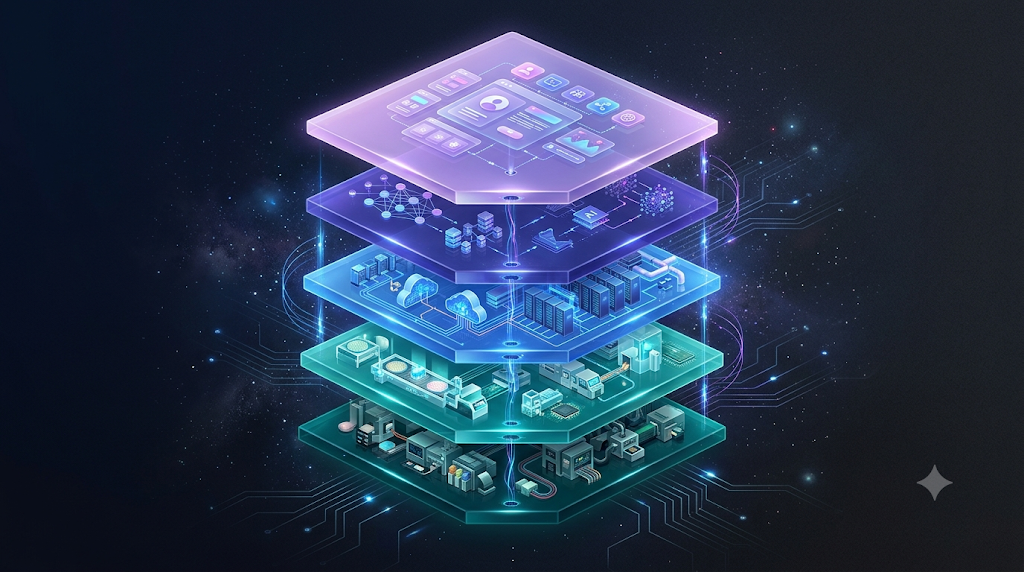
AI Industry Structure, Layer 5: AI Applications
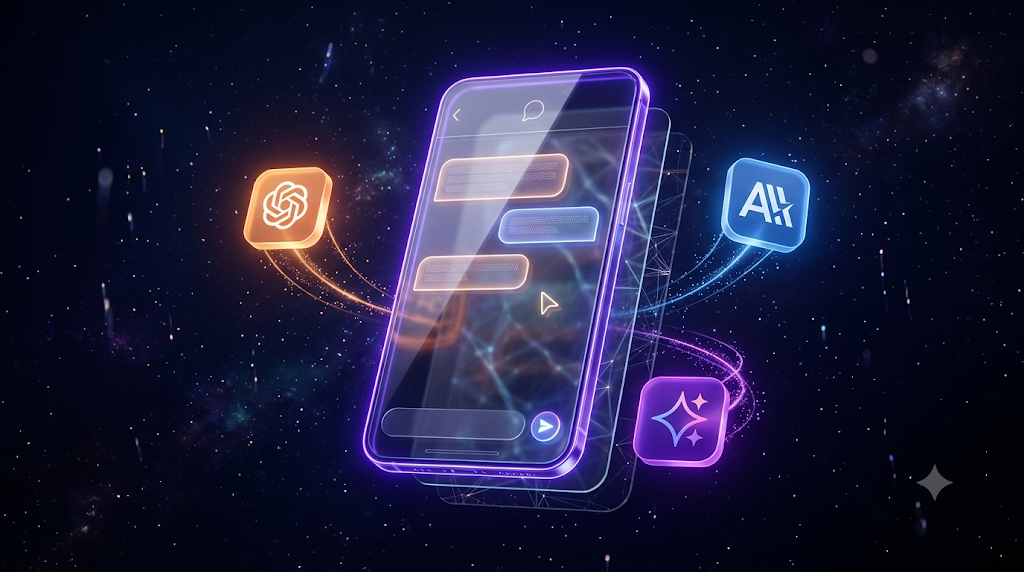
AI applications like ChatGPT, Claude, and Gemini — the ones we open every day — sit at Layer 5, the very top of the AI industry structure. It’s the only layer users actually touch, which makes it the most visible, but within the industry itself it’s often called the “most crowded, thinnest layer.” In this article, we’ll dig into what categories AI applications actually fall into, why this layer gets called a “shell,” and what investors should watch for here.
Revisiting the Application Layer
You type a question into the chat box and get an answer back. But the app itself is actually pretty close to a “shell.” It’s really just a pretty chat window, a login button, and a screen that shows your conversation history — the “brain” that actually answers the question lives in Layer 4, the AI model. The app’s job is just to receive that answer and display it on screen.
But not all “AI applications” are the same kind of thing. Look closer, and they split into three broad categories.
The 3 Types of Applications
1General-Purpose Assistants
These are all-purpose apps you can ask anything. ChatGPT, Claude, and Gemini are the classic examples. This category is defined by one thing: the company that built the app also owns the AI model underneath it (Layer 4). In other words, OpenAI, Anthropic, and Google are companies that actually occupy Layer 4 and Layer 5 at the same time. Being able to control their own model costs is this group’s biggest weapon.
2Vertical Apps (Specialized Apps)
These apps focus on a single specific task. Think GitHub Copilot and Cursor for coding, Midjourney for images, or Perplexity for search. Most of these companies don’t have their own model — instead, they rent OpenAI’s or Anthropic’s model through an API and layer a specialized interface and features on top of it.
3Existing SaaS With AI Bolted On
Like Notion AI and Salesforce Einstein, this is when AI features get bolted onto software that already existed. From the company’s perspective, they’re not selling a separate app but an “upgrade to an existing product” — a strategy that naturally sells AI to their existing customers without needing to win over new users.
Why It’s Called Close to a “Shell”
The reason comes down to low barriers to entry. As long as you rent a model through an API, technically anyone can build a chatbot app in a matter of days. Build a screen, connect an API key, deploy — and you’re done. That’s why this layer ends up being both the easiest to enter and the most fiercely competitive in the entire industry.
This creates an important distinction from an investment standpoint. Companies that own their model outright (general-purpose assistants) can control their own costs, but companies that rent a model (vertical apps, AI SaaS) take a direct hit to profitability whenever API prices rise. No matter how many users they have, their margins can get shaken the moment the model company underneath them raises prices.
What Investors Should Watch For
Model performance keeps converging over time, with the gaps between providers narrowing. That’s why “who’s actually retaining real users (retention)” has become the key competitive edge in this layer these days. Here are some concrete things worth watching.
In other words, at this layer, “how well have they wrapped that model to keep users from leaving” matters more than “how good a model do they use.”
Closing Thoughts
The application layer is the most visible part of the AI industry structure, but it’s also the thinnest and most competitive layer. The real power often sits one level down, with the AI model (Layer 4).
In the next article, we’ll take a close look at that “brain” — Layer 4, AI models. We’ll cover how OpenAI, Anthropic, and Google actually train their models, and why the costs in this layer are so staggering.
We cover how models get trained, why it’s so expensive, and how it differs from open source.